
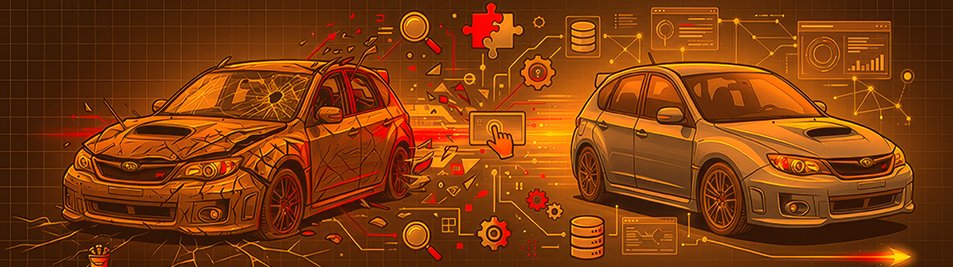
All projects need to start somewhere. There is always a core moment of inspiration that ignites the spark.
For Robin, his entry into the automotive industry began with a broken car.
Getting that car on the road was not just about engines and frames. It exposed how projects stall because information gets lost, handoffs break and small human mistakes create oversized delays.
What Robin learned became integrated into Mecka's DNA.
So here is Robin's origin story (with greasy hands!)
Part 1: Pictures Lie
In 2010, Robin was ready for a new car.
He had been driving a 2004 WRX and was ready for an upgrade to something with more power. He picked the one he wanted. The “big brother” of the WRX which is the WRX STI. Larger engine, heavy-duty transmission, better steering and way more fun to drive.
Robin was on the quest for a deal. And found his dream car online. A 2008 Subaru WRX STI hatchback that was involved in a car crash. He had only online photos, but it looked like getting it back on the road was a manageable project.
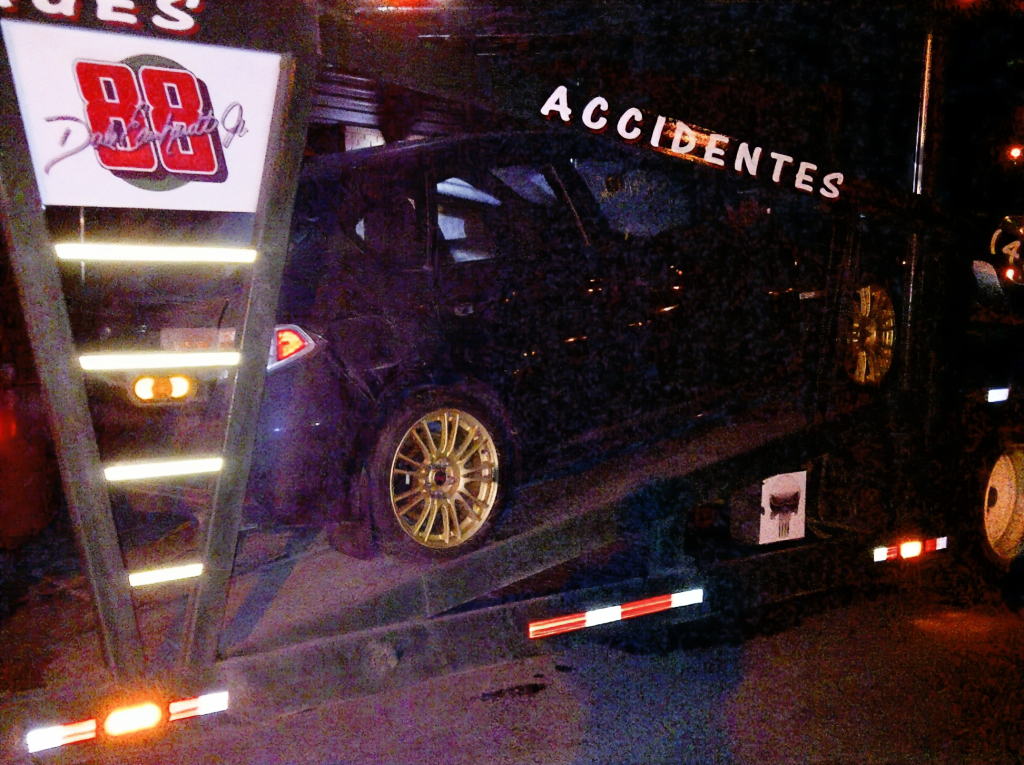
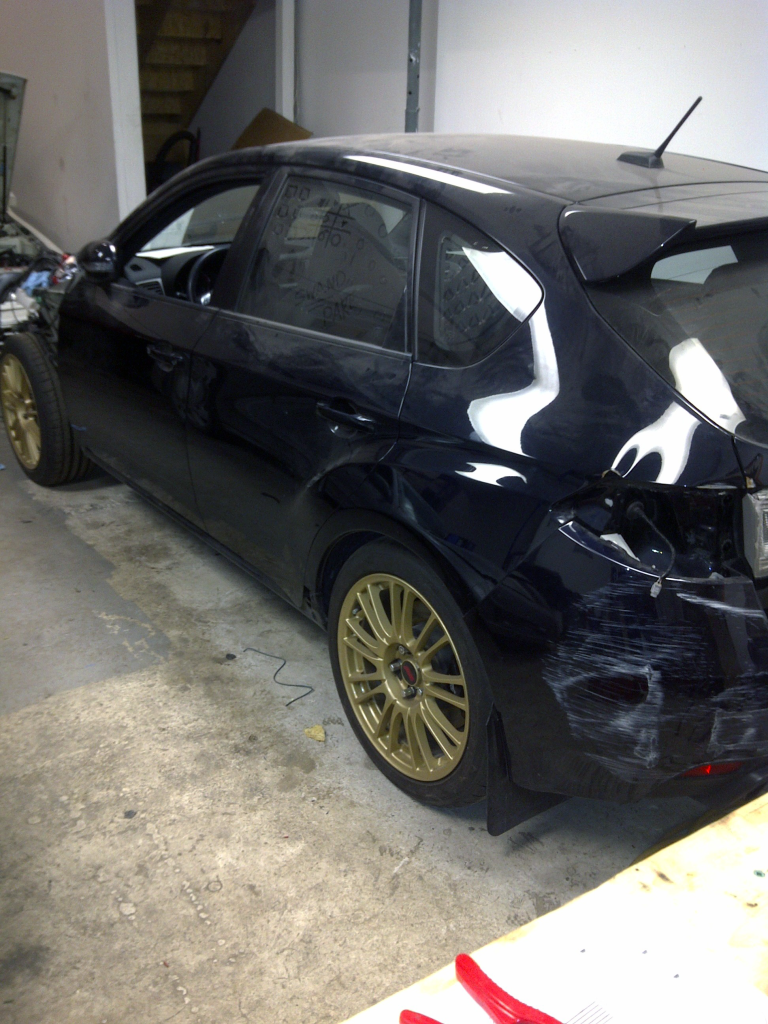
When the car arrived, it was technically drivable off the trailer… barely. The front end was twisted, the rear had shifted, and the frame was bent from two separate impacts. It looked less like a performance machine and more like a cautionary tale.
Now the full story could be seen: the previous driver had lost control, hit something hard enough to shift the entire engine and front structure, then spun and hit again. The car’s “middle” was fine, but both ends had moved.
This all meant that framework needed to be fixed and safe before anything else could be trusted.
Robin Lesson #1: Scrutiny... The Reality Check
Part 2: The Teardown (Let’s Fix Humpty Dumpty)
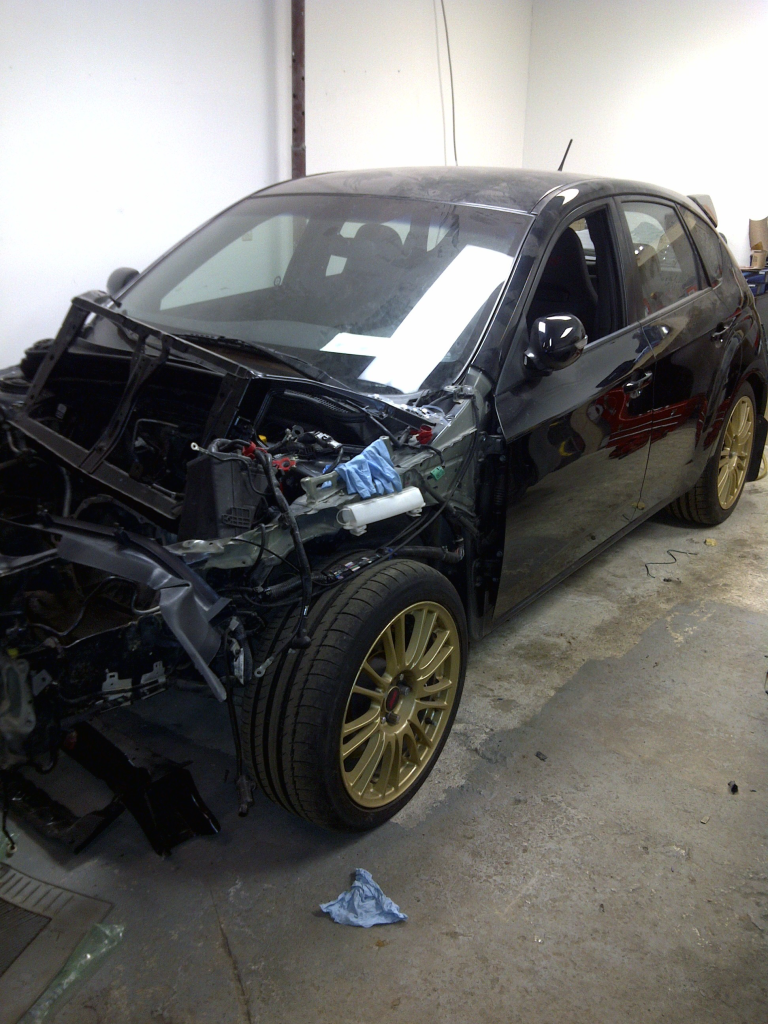
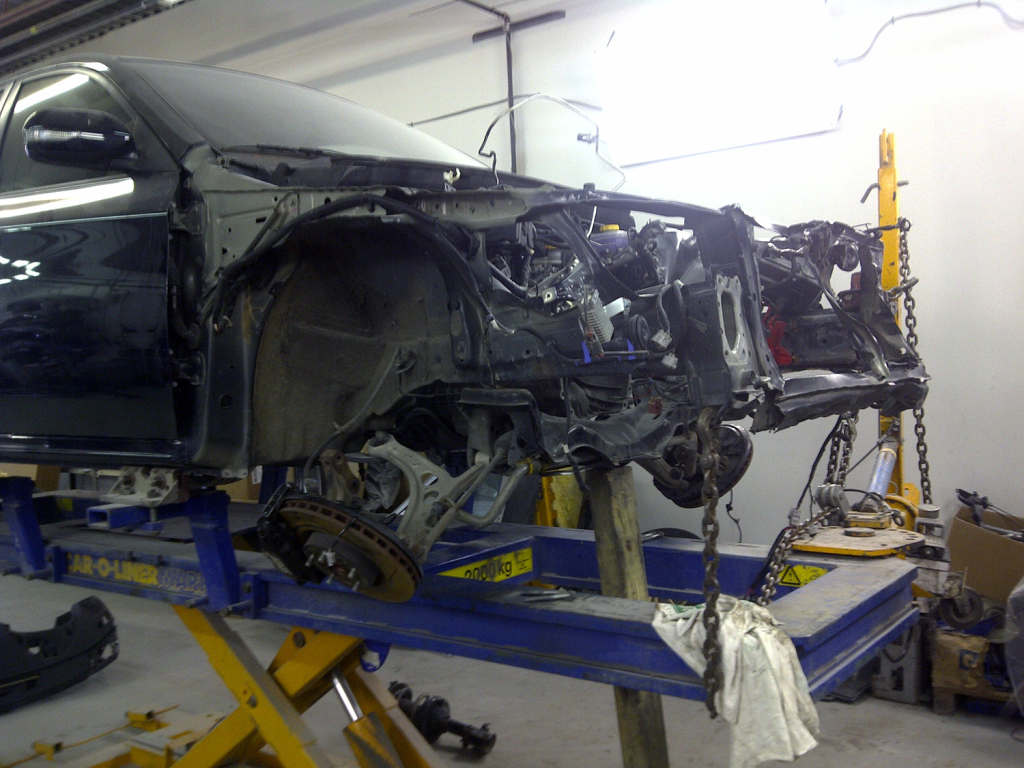
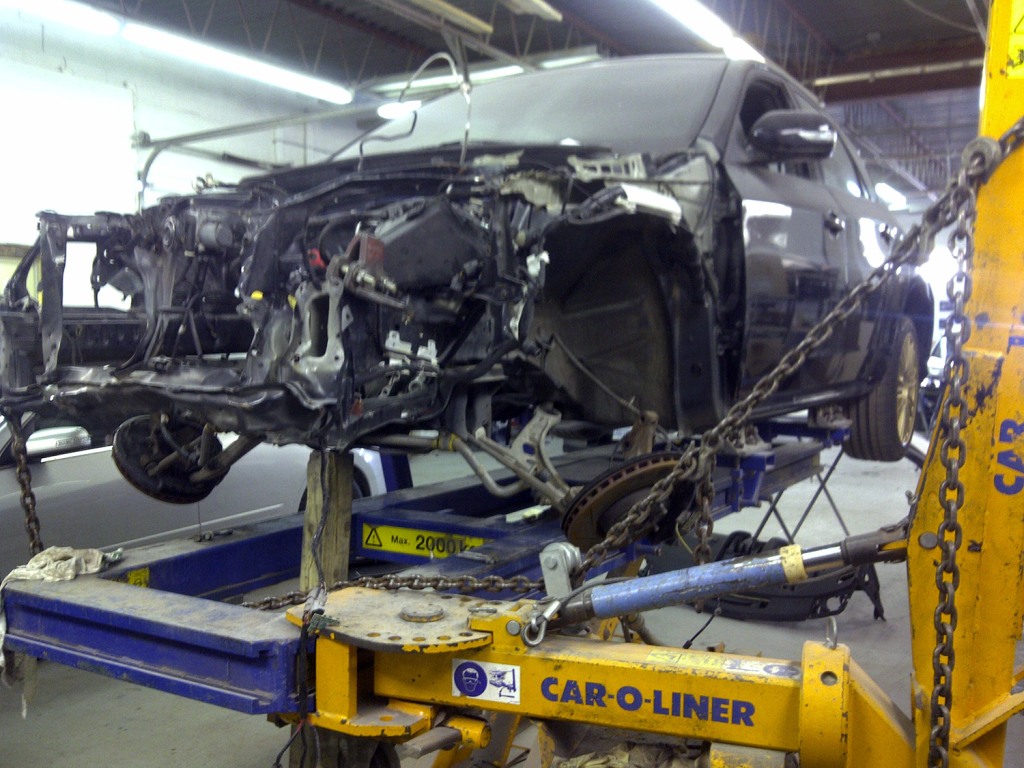
Robin worked with some friends who are mechanics and they started dismantling what they could: bolts off, components off, pieces organized as best as they knew how. Robin got an appreciation for how challenging (and frankly artistic) the work can be when you’re operating in tiny spaces with tight tolerances.
The first “real” step was frame repair, so Robin brought the car to a body shop and explained the project. They agreed to take it on—but he learned a painful truth about discovery-based work: every time the shop found something new that required ordering parts, the car effectively went to the back of the queue. They would start to work, but then discover a broken piece, order parts, and then wait for them to arrive. Then repeat that process again and again.
The result: the STI sat at the body shop for almost a year and a half. Weeks would pass. A month and a half would vanish because one more part was needed. It was a slow, stop-and-go progress—exactly the kind that drains momentum from any project.
Worse, not every delay was “mechanical.” Robin also experienced the simplest kind of failure: ordering parts by phone, only to find out later that the order hadn’t actually been placed. This could be because it was the end of the day, or someone hung up, or they got pulled into something else – and never finished the work.
Robin Lesson #2: Streamline... Reduce Clicks
Part 3: Reassembly from a “bucket of bolts”
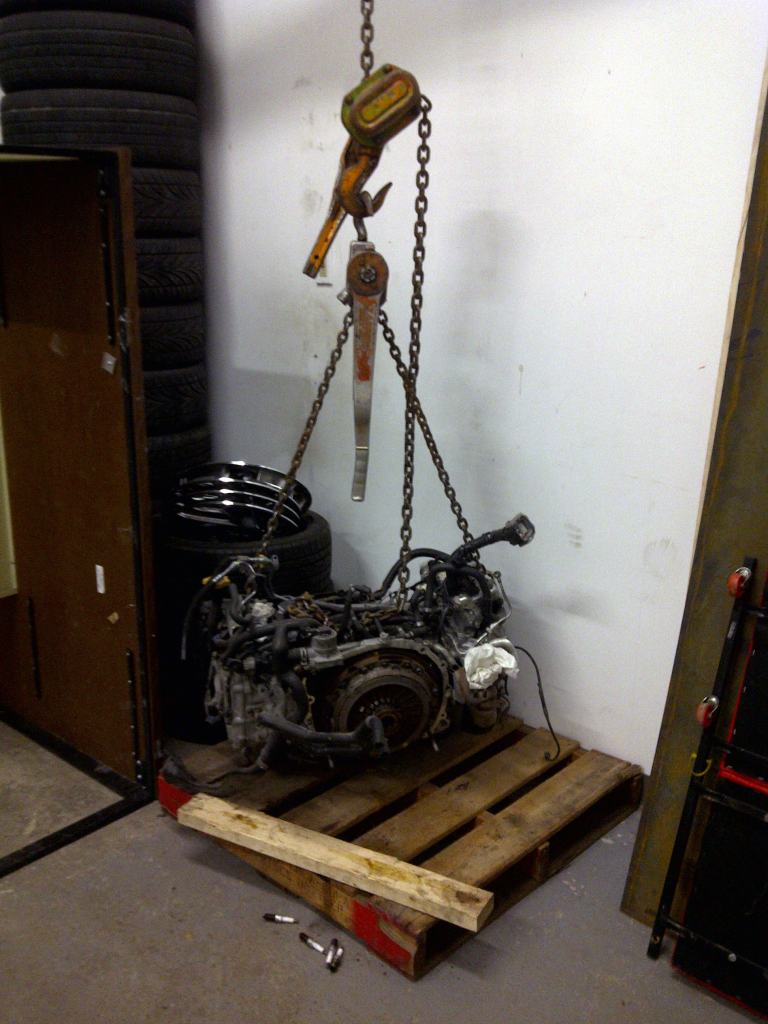
Once the frame was fixed and everything was aligned, it was time for the next step. Reuniting the now straightened frame with the engine sitting on a crate, using a literal bucket of bolts.
When the car was taken apart, there were no reassembly plans. That means the various loose parts had no labels. Just a disorganized bucket-of-bolts.
One mechanic looked at the mess, sighed and asked, “Buddy, what are you bringing me?”
Reassembly meant detective work—figuring out what goes where—on top of the already tough job of putting Humpty Dumpty back together again.
Robin Lesson #3: Structure... Label the Bolts
Part 4: Standards Matter (aka The Sensors, The Limp Mode and the Clock Spring)
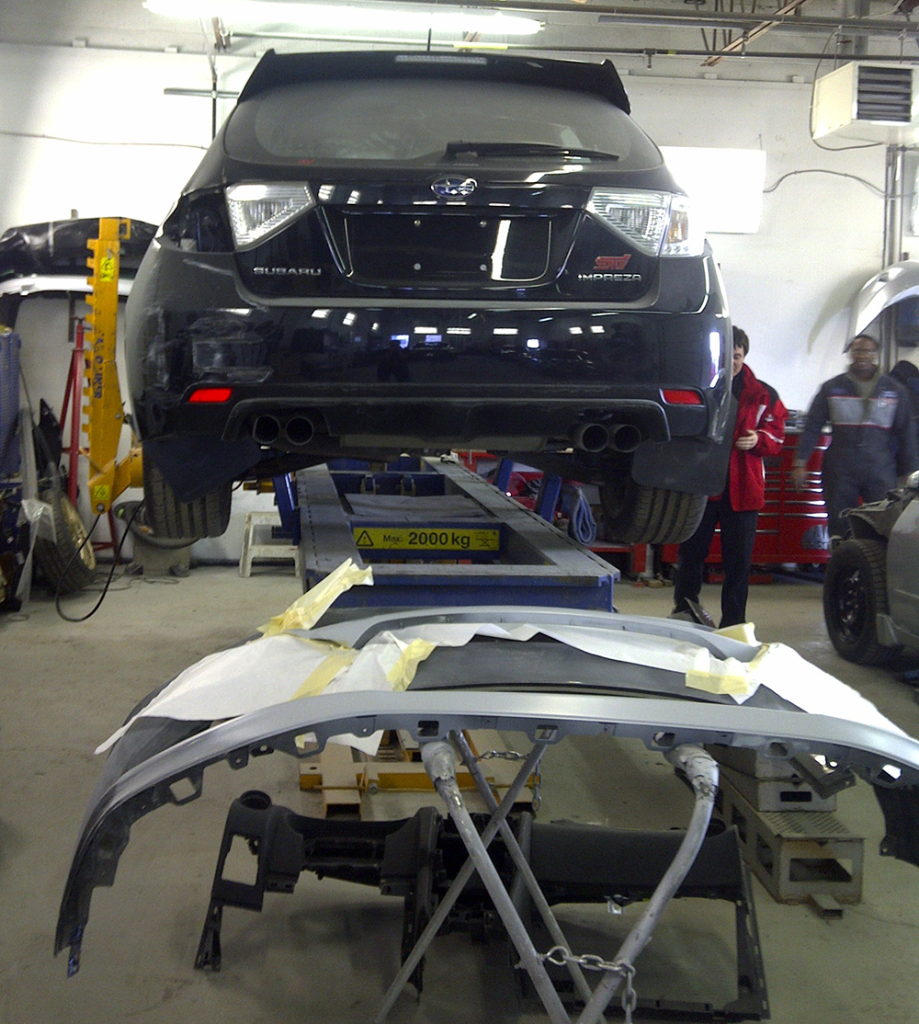
After the car was reassembled, parts purchased, crash systems addressed (airbag sensors, airbags for the steering wheel, a new clock spring, and more), the next step was inspection and certification.
One rule in particular hit hard. Used crash sensors are not accepted for certification. That meant Robin had to sell the used sensors he had already bought and replace them with full-cost dealership parts.
Even with the pricey parts, the STI would drop into limp mode — an intentionally limited-power state designed to let you get off the road safely (not drive home). This became a three-month troubleshooting stretch centered on one deceptively small component: the clock spring (the part behind the steering wheel that maintains electrical connections as the wheel turns).
Even with new OEM Subaru parts, the sensors failed – twice. It took three replacements to fix the issue. It was a reminder that even the best standards can still be implemented incorrectly.
Robin Lesson #4: Standards... The Foundation
Part 5: The job Isn’t Done Until the Paperwork Is Finished
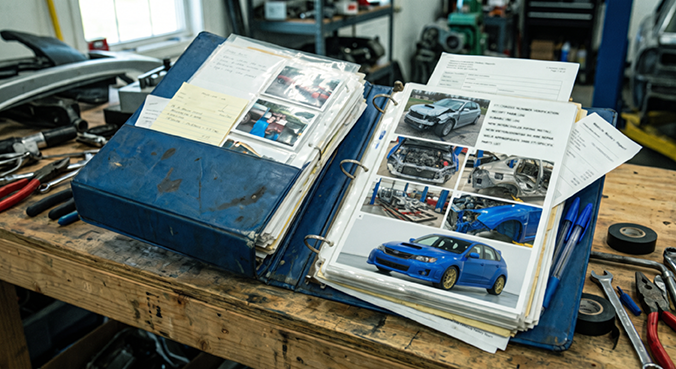
When it was time to bring the car in for certification, it wasn’t “just bring the car.” Robin had to bring proof: receipts, paperwork, printed documents, and a full before-and-after trail. He assembled a binder that included photos of the crashed car, photos during repairs, and photos after. Lots of evidence that the work was done and done properly.
That binder represented a 3.5-year endeavor. Not a small thing to pull together.
The first time through, inspectors flagged remaining items to address.
Even more fixes needed, then another inspection.
And then finally… the car could be registered and driven again.
Robin Lesson #5: Stability... Building Trust
The Better Way
By the time the STI finally roared to life in 2013, three and a half years had passed.
The rebuild made one thing painfully clear: projects don’t derail only because they’re complex. They derail because a process can be fragile. A part order that doesn’t get placed, a form that gets stuck in someone’s inbox, a task that’s “basically done” but not actually completed — these tiny issues add up to big delays.
This creates a requirement to remove as many failure points as possible: automate the handoffs, make the next action obvious, and reduce the workflow to the minimum number of steps. When the right next step is a single clear action, it’s easier to keep momentum — and easier to know when something truly hasn’t been done.
There are specific lessons learned. The same “label the bolts” problem exists in the parts industry at massive scale. Data arrives in all kinds of ways, including spreadsheets and emails that is often inconsistent, incomplete, and hard to trust.
Rebuilding a crashed car taught Robin what building any serious system teaches you sooner or later: the work is rarely “just the work.” It’s the waiting, the handoffs, the missing context, the standards, the proofs, the exceptions—and the human moments when simple problems compound and everything slows down.
The STI rebuild comes down to five concepts that are now ingrained in Mecka:
- Scrutiny: The Reality Check - Don’t trust the "glossy" view and get caught off guard by "bent frames" in your data.
- Streamline: Reduce the Clicks – Fewer steps means fewer chances for a project to get delayed.
- Structure: Label the Bolts - Scale is only possible when you are organised.
- Standards: The Common Language – The base that lets any sized business compete.
- Stability: The Foundation of Trust – Proof that all work is done correctly builds relationships.
Reality is not found in a boardroom. It is in the grease of a garage, in the frustration of long waits, and in disorganized buckets of bolts.
Today, that 2008 Subaru WRX STI is more than a car. It’s the beginning of a plan that is fixing real-world problems through ambition, knowledge and hard work.
